
7 min read
VCA VOL Exam Simulation for Managers 2026
Prepare for the VCA VOL exam with an effective exam simulation. Achieve your diploma with a complete, realistic simulation!

The most realistic preparation for the VCA VOL exam is a timed exam simulation that mimics the SSVV assessment criteria of ETT 3.0 and provides immediate error analysis by theme. No loose practice questions, no summaries to read: a complete simulation under exam conditions is what makes the difference.
The key facts at a glance:
- 60 questions, 60 minutes — that is the official format starting from 2026
- Passing standard: 65% — expect the passing score according to the official norm
- Diploma validity: 10 years — always check the current specifications via SSVV
- Question types: multiple choice, matrix, matching, and multiple answers (ETT 3.0)
- Free demo available via Vcaproefexamen — no registration required
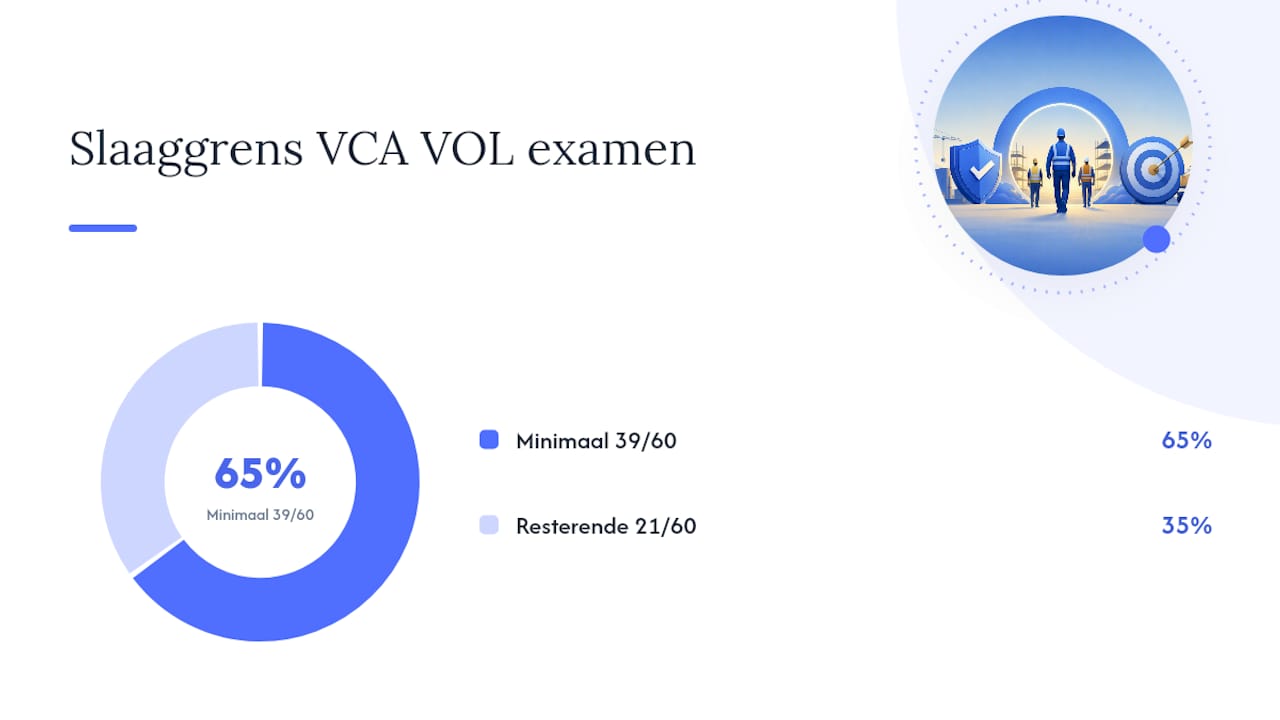
Passing standard VCA VOL: 65% — that means at least 39 out of 60 questions correct, without access to resources and within the time limit.
Table of Contents
- How is the VCA VOL exam structured and how is the score calculated?
- Which type of practice exam best suits your situation?
- What do you need to know about registration, languages, and in-company exams?
- Key Insights
- Ready to practice? Here’s how to start with Vcaproefexamen
- Useful resources and official links
How is the VCA VOL exam structured and how is the score calculated?
As of January 1, 2026, the updated final and assessment criteria of ETT 3.0 apply. The exam consists of 60 questions that you must answer within 60 minutes. Each question carries equal weight; the passing standard is set at 65%.
| Component | Detail |
|---|---|
| Number of questions | 60 |
| Time limit | 60 minutes |
| Passing standard | 65% (at least 39 questions correct) |
| Question types | Multiple choice, matrix, matching, multiple answers |
| Diploma validity | 10 years |
| Exam standard | ETT 3.0 (valid from January 1, 2026) |
What does this mean for your simulation settings? Set the timer to exactly 60 minutes, disable all resources, and only reveal the score after completion. This way, you practice not only the material but also the pace and pressure. One minute per question is little when faced with a matrix question that evaluates four situations at once.
Pro-tip: Set your simulation so that you do not see an interim score halfway through. Anyone who knows after 30 questions that they have ten wrong will lose focus. Train yourself to continue without that information.
Which type of practice exam best suits your situation?
Not every practice session has the same value. The choice depends on how much time you have and how far along you are in your preparation.
- Short practice sets by theme — suitable as a first step to measure where you stand; no timer, but immediate feedback per question
- Full exam simulation — 60 questions, 60 minutes, no resources: the most valuable learning session for those who have already built a basic knowledge
- Thematic practice bundles — useful for specifically repeating a weak theme (for example, hazardous substances or working at heights)
- In-company sessions — for teams where a manager wants to let multiple employees practice at once, possibly in another language
What distinguishes a good simulation from a set of loose practice questions:
- A real timer that counts down and cannot be paused
- Question types that match ETT 3.0 (matrix, matching, multiple)
- Scoring that adheres to the official cutoff of 65%
- Error analysis by theme, so you know where to focus your time afterward
For a busy manager with little study time: first do one full simulation to know your starting position, then focus on thematic practice on the weakest areas. For a team leader who wants to prepare their entire team: choose a platform with in-company options and multilingual support.
What do you need to know about registration, languages, and in-company exams?
The official exam administration runs through CDR SSVV, the technical portal for exam administration. There you will find current exam locations, available dates, and the registration procedure. Always check CDR just before registering, as locations and times may change.
Practical checklist for exam day:
- Bring a valid ID (passport or driver's license)
- No resources allowed during the exam
- Be on time: being late usually means no access
- Check if your location offers the language you need
Language options are relevant for mixed teams. The VCA exam is available in Dutch, but for multilingual teams, a platform like Vcaproefexamen offers practice material in French, English, German, and Polish. This makes preparation more accessible for employees who do not have Dutch as their native language.
In-company exams are possible for larger groups. Contact a recognized examination institution or consult SSVV for the conditions. An in-company session requires a minimum number of participants and must meet the same official administration conditions as a regular exam.

Key Insights
A timed VCA VOL exam simulation with ETT 3.0 question types and error analysis by theme is the most effective preparation for managers who want to pass on the first try.
| Point | Details |
|---|---|
| Exam format 2026 | 60 questions, 60 minutes, passing standard 65% — at least 39 questions correct. |
| ETT 3.0 question types | Practice matrix, matching, and multiple answers; factual knowledge alone is not enough. |
| Study schedule | Start with a diagnostic simulation, practice thematically on weak points, finish with full simulations. |
| Exam logistics | Register via CDR SSVV; check location, language, and ID requirements well in advance. |
| Vcaproefexamen | Offers free demo, ETT 3.0 question bank, exam timer, and error analysis in five languages. |
Why memorizing lets you down with ETT 3.0
Candidates who fail the VCA VOL exam rarely have a knowledge deficit. They fail because they cannot apply the material under time pressure, in a situation they have not practiced before. ETT 3.0 is designed exactly for this: the questions force you to reason, not to recognize.
The biggest pitfall is a false sense of security after reviewing summaries. You recognize the concepts, you know what an LMRA is, you know the color codes for hazardous substances. But a matrix question that evaluates four work situations at once asks something different: decision-making under pressure, without the luxury of rereading.
What works: practice with question types that make you uncomfortable. If a simulation feels too easy, it is not a good simulation. Seek the friction, analyze your mistakes, and repeat. That is the only schedule that holds up with ETT 3.0.
Ready to practice? Here’s how to start with Vcaproefexamen
Anyone who takes the VCA VOL exam seriously needs more than a few loose practice questions. Vcaproefexamen provides you with a complete exam simulation with a real timer, ETT 3.0 question types, and error analysis by theme. No subscription, no ads.
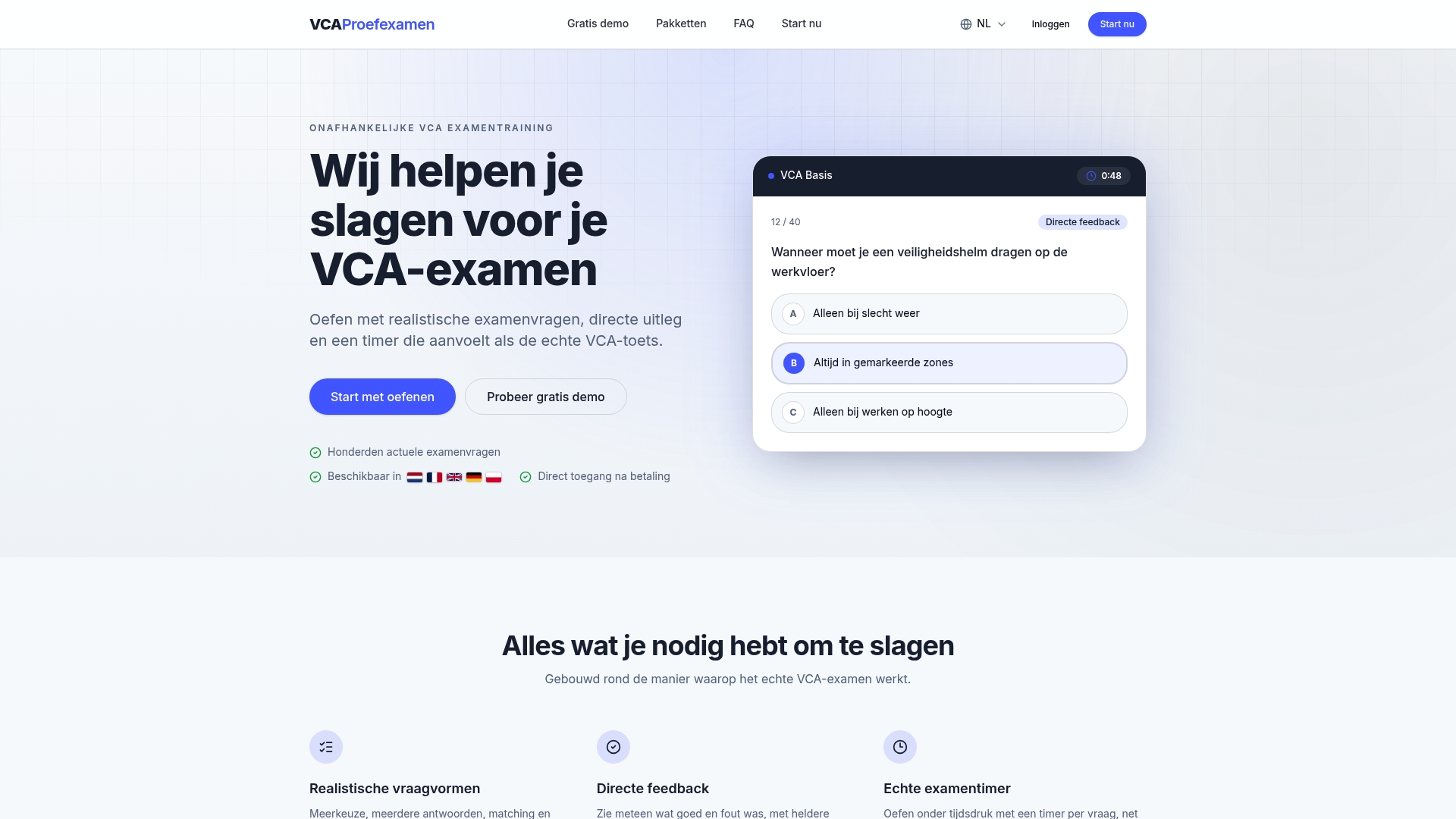
Choose the package that fits your study time: 3 days for a focused final push, 7 days for a structured week of preparation, or 30 days if you want to work calmly and thoroughly. All packages provide access to the full question bank in five languages.
Want to see how the simulation works first? The free demo starts without registration. This way, you can immediately check if the question types and timer match the official exam before choosing a package.
Useful resources and official links
Always check the official SSVV sources before registering, as exam specifications and locations may change.
- SSVV — official exam information: target groups, diploma validity, and current exam rules
- SSVV — VCA exams and assessment criteria: explanation of ETT 3.0 and substantive changes
- CDR SSVV: technical portal for registration, exam locations, and administration dates
- VCA new final and assessment criteria 2026: detailed explanation of the 2026 assessment criteria and examples of new question types
- Vcaproefexamen — free demo and packages: start immediately with a realistic VCA VOL exam simulation